
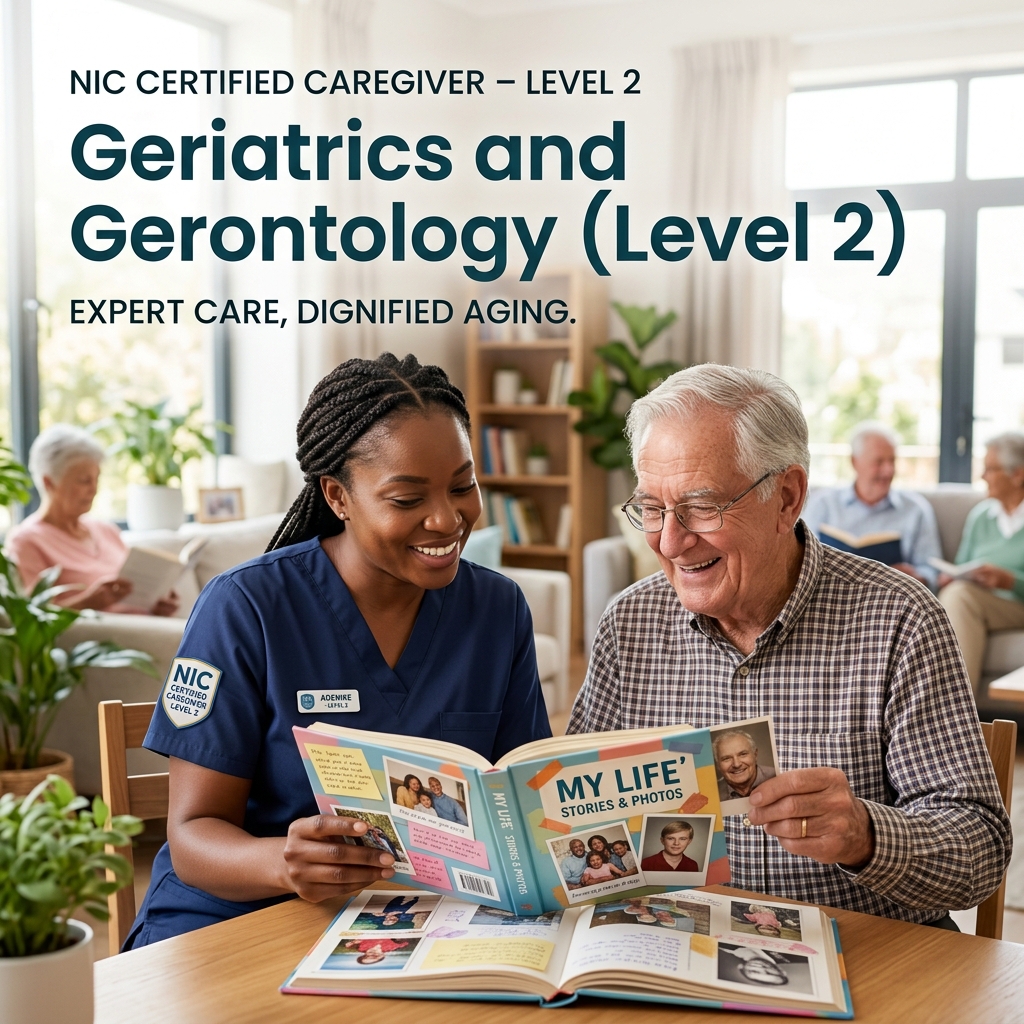
NIC Certified Caregiver – Level 2: Geriatrics and Gerontology
Purpose of the Course
This comprehensive vocational training program, "NIC Certified Caregiver – Level 2: Specialization in Elderly Care & Gerontology," is meticulously designed to equip aspiring and existing caregivers with the specialized knowledge, practical skills, and ethical understanding required to provide exceptional care for elderly individuals. The course aims to elevate the standard of elderly care in Nigeria by fostering a professional, compassionate, and culturally sensitive approach. It moves beyond basic care principles to delve into the intricacies of the ageing process, common geriatric conditions, and the unique psychosocial needs of older adults, ensuring that graduates are not merely task-oriented but holistic care providers.
Who the Course is For
This course is ideal for individuals who are passionate about caring for the elderly and seek to professionalize their skills. It is particularly suited for:
Aspiring Caregivers: Those new to the caregiving profession who wish to build a strong foundation in elderly care. Existing Caregivers: Individuals already working in care roles who want to specialize in gerontology, enhance their expertise, and achieve formal certification. Family Caregivers: Family members providing care for elderly relatives who desire structured training to improve their caregiving techniques and understanding. Healthcare Assistants & Support Workers: Professionals in related fields looking to broaden their scope of practice and specialize in geriatric care.
Importance in Nigeria
Nigeria is experiencing a demographic shift, with a growing elderly population. This demographic trend presents both opportunities and challenges for the healthcare and social care sectors. The importance of specialized elderly care training in Nigeria cannot be overstated due to several critical factors:
Increasing Elderly Population: Advances in healthcare and living conditions mean more Nigerians are living longer, leading to a greater demand for specialized geriatric care services. Cultural Significance of Elders: In Nigerian culture, elders hold a revered position. Providing dignified and respectful care aligns with deeply ingrained cultural values, making professional training essential to uphold these traditions in a modern care context. Addressing Care Gaps: There is a significant gap in formally trained and certified caregivers specializing in gerontology. This course directly addresses this need, contributing to a more robust and skilled care workforce. Promoting Quality of Life: Professional caregivers can significantly improve the quality of life for elderly individuals, enabling them to age with dignity, comfort, and independence within their communities. Economic Opportunity: The demand for skilled caregivers creates viable career pathways and economic empowerment for individuals, contributing to national development.
Career Outcomes
Graduates of the "NIC Certified Caregiver – Level 2: Specialization in Elderly Care & Gerontology" course will be well-prepared for a variety of rewarding career opportunities within Nigeria's burgeoning care sector. Potential career paths include:
Certified Elderly Caregiver: Providing direct care in private homes, assisted living facilities, or nursing homes. Geriatric Support Worker: Assisting healthcare professionals in hospitals or clinics specializing in geriatric medicine. Home Care Specialist: Managing and delivering comprehensive care services to elderly clients in their own homes. Dementia Care Assistant: Specializing in supporting individuals living with dementia and their families. Palliative Care Assistant: Working alongside palliative care teams to provide comfort and support to individuals with life-limiting illnesses.
This certification enhances employability, opens doors to higher earning potential, and provides a recognized credential that signifies a commitment to professional excellence in elderly care.
Professional Expectations
Upon completion of this course, caregivers are expected to embody the highest standards of professionalism, ethics, and compassion. Key professional expectations include:
Client-Centered Care: Always prioritizing the needs, preferences, and dignity of the elderly individual. Ethical Conduct: Adhering to a strict code of ethics, maintaining confidentiality, and respecting client autonomy. Effective Communication: Communicating clearly, empathetically, and respectfully with elderly clients, their families, and other healthcare professionals. Cultural Competence: Demonstrating an understanding and respect for diverse cultural beliefs, practices, and family dynamics prevalent in Nigeria. Continuous Learning: Committing to ongoing professional development and staying updated with best practices in geriatric care. Safety & Risk Management: Implementing best practices to ensure the safety and well-being of clients, preventing accidents, and recognizing potential risks. Teamwork & Collaboration: Working effectively as part of a multidisciplinary care team, understanding one's role and responsibilities.
This course lays the groundwork for a fulfilling and impactful career, empowering caregivers to make a profound difference in the lives of Nigeria's elderly population.
* Requires Active Membership (from ₦5,000/yr)
Course Curriculum
This course includes:
- 100% Online & Self-Paced
- Lifetime Access
- Certificate of Completion
- NIC Accredited