Training & Certifications
Elevate your career with our nationally recognized caregiver training programs. From foundational skills to specialized care management.
Intermediate
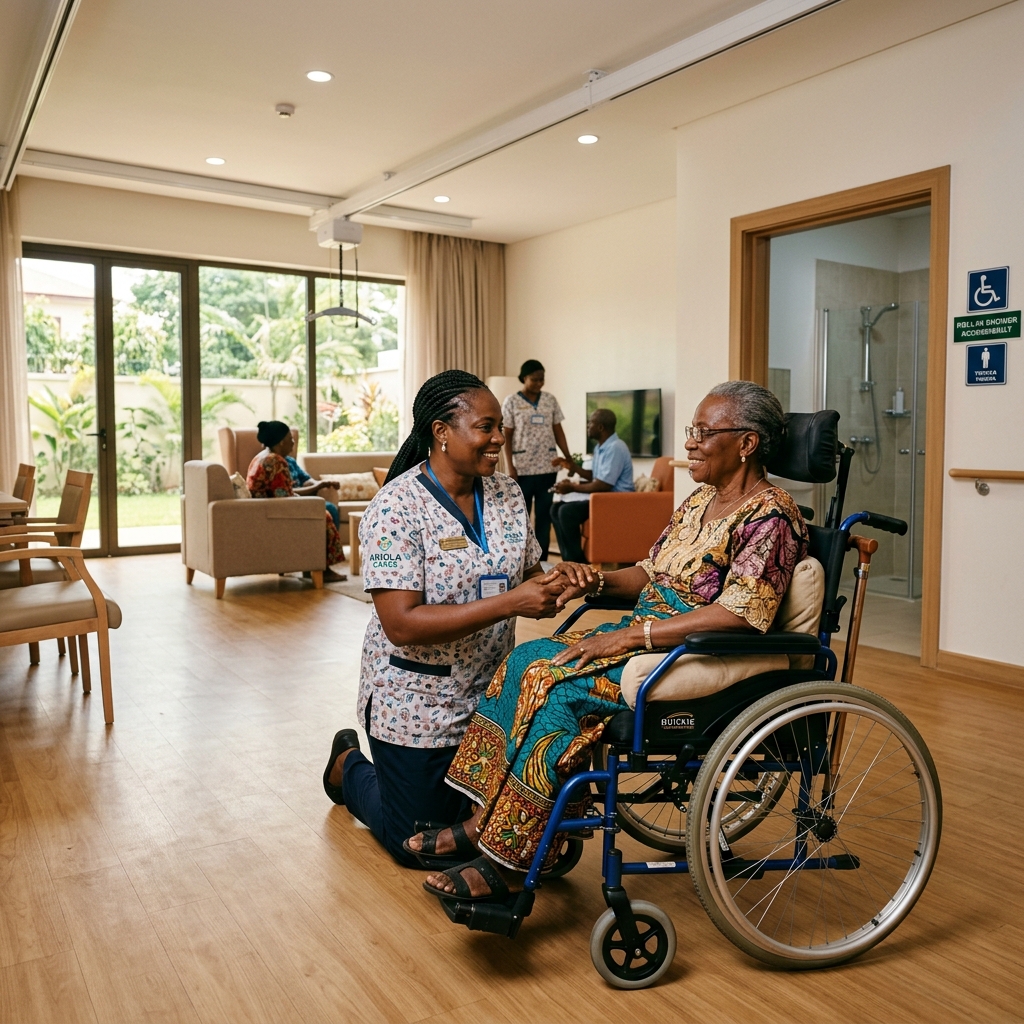
DISABILITY & SPECIAL NEEDS CARE
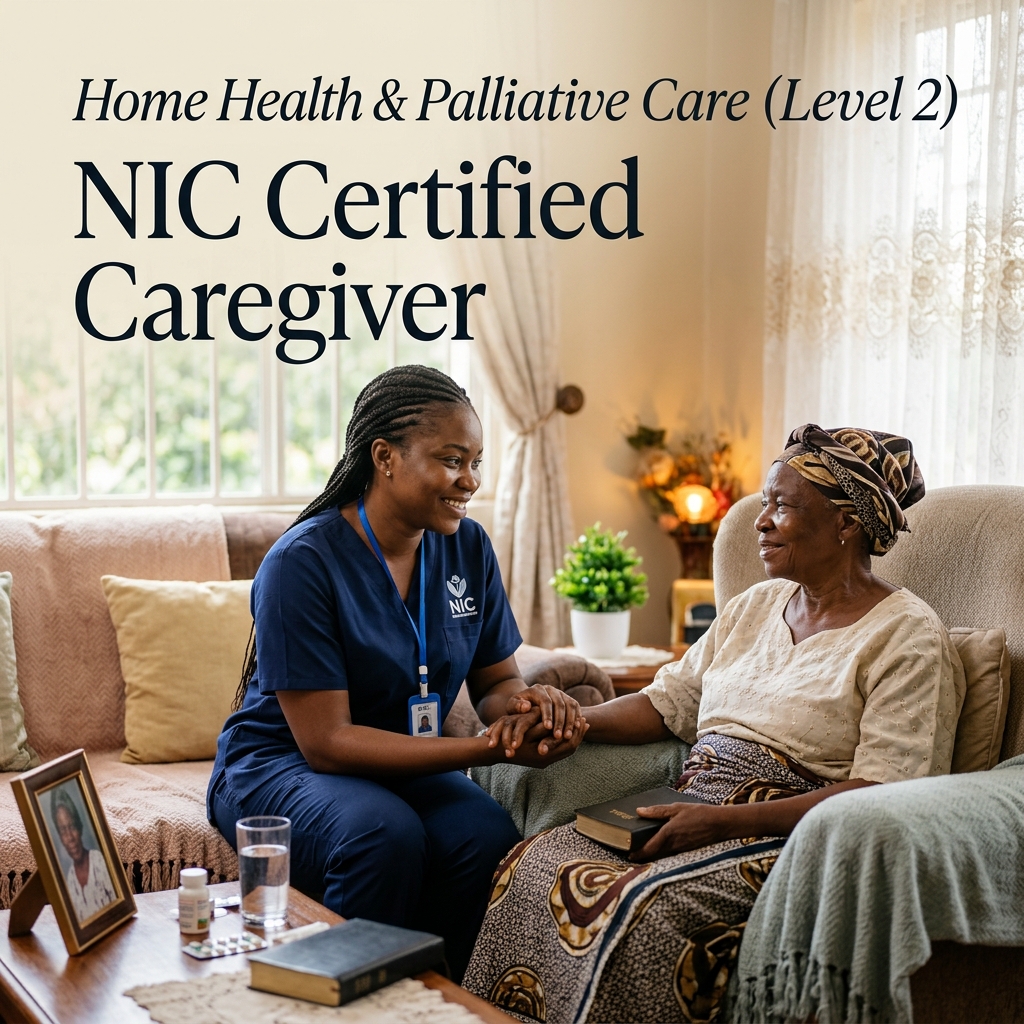
Welcome to the NIC Certified Caregiver – Level 2: Disability & Special Needs Care program. This intermediate-level specialization builds upon your foundational training and prepares you to provide professional, respectful, and effective support to individuals with disabilities across a range of care settings.
This introduction establishes the essential framework for your learning throughout this course. It explains what disability means in the context of professional caregiving, the diversity of conditions you will encounter, and the fundamental principles that must guide your practice.
Your Role as a Professional Caregiver
This course prepares you to be a support professional, not a controller or decision-maker. Your responsibilities include:
Supporting Independence: Your goal is to enable the person to do as much as possible for themselves, not to do things for them. This requires patience, skill-building, and willingness to step back even when it takes longer.
Ensuring Safety: You must recognize risks to vulnerable individuals—physical harm, neglect, exploitation, and abuse—and take appropriate action to prevent and report them.
Facilitating Communication: For individuals with speech, hearing, or cognitive impairments, you must find ways to understand and be understood. Communication is the foundation of all other support.
Promoting Inclusion: You help individuals access their communities, maintain relationships, and participate in activities that matter to them.
Working with Families: You support not only the individual but also family members who may be exhausted, worried, and uncertain. You provide education, respite, and partnership.
Maintaining Professional Boundaries: You are a caregiver, not a family member. You maintain appropriate emotional distance while providing compassionate care. You do not exploit, befriend outside professional limits, or accept inappropriate gifts or favors.
What This Course Will Teach You
Over the following six modules, you will develop competence in:
Module 1: Understanding different types of disabilities and applying inclusive, rights-based approaches to care.
Module 2: Implementing person-centered care that preserves autonomy and respects individual preferences.
Module 3: Safely supporting individuals with physical disabilities and mobility challenges.
Module 4: Communicating effectively with and supporting individuals with intellectual and developmental disabilities.
Module 5: Assisting individuals with sensory impairments through adapted communication and environmental support.
Module 6: Protecting vulnerable individuals from harm and maintaining professional standards of practice.
80 Hours
Online
₦350,000View Syllabus
Enroll NowIntermediate
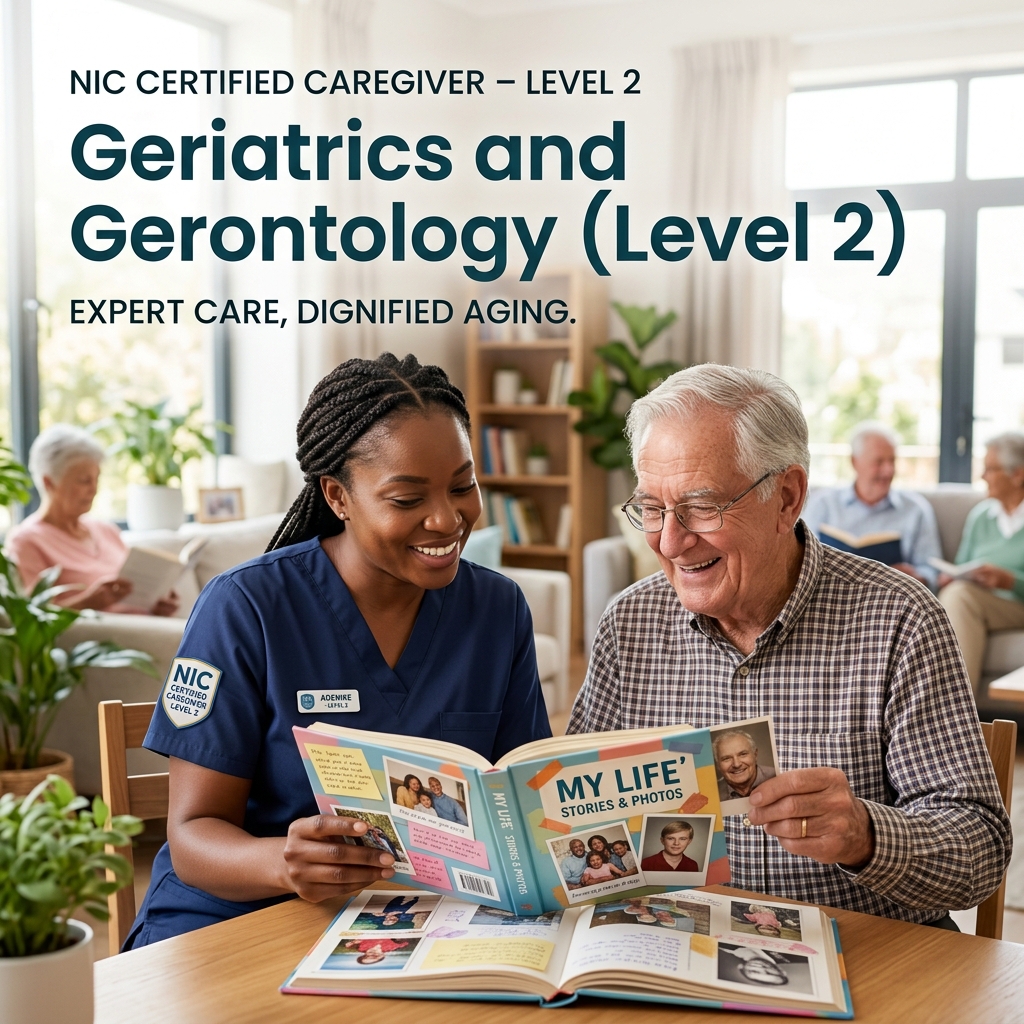
SPECIALIZED ELDERLY CARE & GERONTOLOGY
Welcome to the NIC Certified Caregiver – Level 2: Specialized Elderly Care & Gerontology program. This intermediate-level course is designed for caregivers who have completed foundational training (Level 1) and are ready to advance their expertise in caring for older adults. This is not an introductory course; it is a professional specialization that will equip you with the advanced knowledge and clinical reasoning skills required to provide safe, dignified, and evidence-informed care to the elderly in Nigeria.
The Growing Need for Professional Caregiving
Nigeria, like the rest of the world, is experiencing a significant demographic shift. Our population is ageing. With advances in healthcare, people are living longer, often with multiple chronic conditions. This presents a new set of challenges for families, communities, and the healthcare system. In the past, the extended family system provided a natural safety net for the elderly. However, rapid urbanization, increased participation of women in the workforce, and changing family structures are weakening this traditional support system. More and more families are seeking external, professional support to ensure their loved ones receive the quality care they deserve.
Simultaneously, there is a growing recognition of the vulnerability of older adults. Issues like elder abuse, neglect, and financial exploitation, while often underreported, are real and pressing concerns. Untrained family members or informal helpers may lack the skills to manage complex conditions like dementia, stroke aftercare, or the subtle signs of depression in the elderly. This gap is where the professional caregiver becomes indispensable.
Why This Specialized Training Matters
Level 1 training provided you with the fundamental skills of caregiving. This Level 2 specialization builds upon that foundation. It transforms a general caregiver into an Elderly Care Specialist. This course will teach you to see beyond the surface. You will learn to differentiate between what is a normal part of ageing and what is a warning sign of a pathological condition. You will gain the competence to manage challenging behaviors associated with dementia with compassion and safety. You will understand how to support chronic disease management in a home setting, identify risks like falls and pressure injuries before they occur, and provide comfort and dignity at the end of life.
This training is strategic for several reasons:
For the Care Recipient: It ensures they receive care that maintains their health, safety, and dignity.
For the Family: It provides families with peace of mind, knowing their loved one is in capable hands, and it equips you to communicate professionally and effectively with them.
For the Caregiver: It elevates your professional status, opens doors to specialized employment in facilities and high-net-worth homes, and provides the deep satisfaction of mastering a complex and highly respected skill set.
For the Nation: It positions the Nigerian Institute of Caregivers (NIC) and the broader caregiving profession as a credible authority in ageing care, contributing to a stronger, more resilient health and social care system.
The Role of the Professional Caregiver
As a Level 2 specialist, your role expands. You are not just a helper; you are a proactive member of a care team, even if you are the only professional involved. Your responsibilities include:
Observer and Reporter: You are the eyes and ears on the ground, monitoring for subtle changes in physical and mental condition and reporting them appropriately.
Risk Manager: You constantly assess the environment and the client's condition to prevent accidents and complications.
Care Plan Implementer: You translate a care plan into daily actions, from mobility support to medication reminders.
Advocate and Supporter: You uphold the dignity and rights of the elderly person, providing emotional and psychosocial support.
Educator and Communicator: You guide families on how to best support their loved one and maintain clear, professional records.
This course is your pathway to mastering these responsibilities. It is structured to be practical, rigorous, and deeply connected to the realities you will face in Nigerian homes and care facilities. We expect you to engage with the material critically, reflect on your own experiences, and emerge as a true specialist in elderly care.
94 Hours
Online
₦350,000View Syllabus
Enroll NowFoundation
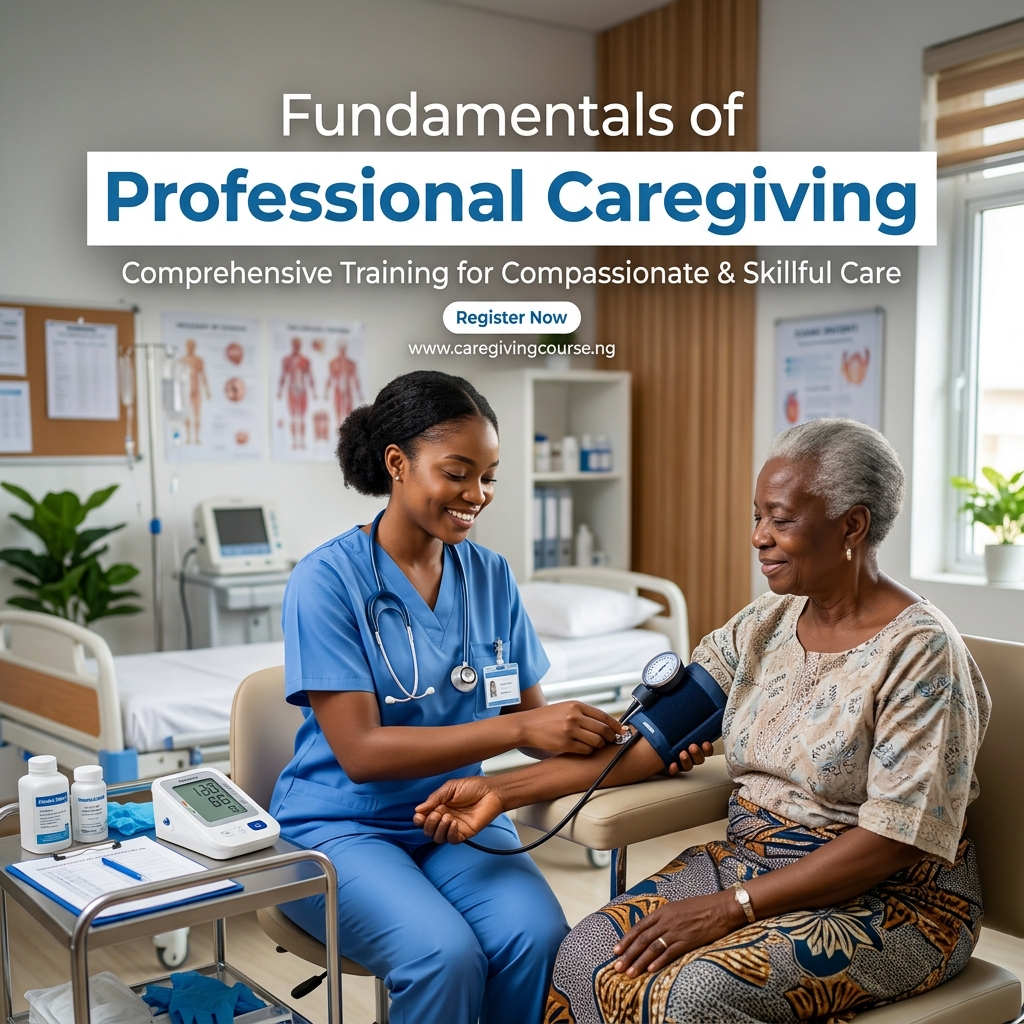
FUNDAMENTALS OF PROFESSIONAL CAREGIVING
Welcome to Fundamentals of Professional Caregiving, the foundational training course of the National Institute of Caregivers (NIC), Nigeria.
You are beginning a journey into one of the most important and sensitive professions in society — caring for people who depend on others for their safety, dignity, comfort, and wellbeing.
Caregiving is not merely a job. It is a professional responsibility, a public trust, and a service to humanity. This course exists to ensure that caregivers in Nigeria are equipped with the knowledge, skills, and ethical grounding required to perform this role with competence and integrity.
Why This Course Matters
Across Nigeria, millions of people require daily care — older adults, persons with disabilities, individuals recovering from illness, children with special needs, and those living with chronic conditions. Traditionally, caregiving has been carried out informally by family members or untrained helpers.
While care provided with love and good intentions is valuable, professional caregiving requires more.
Without proper training:
Care recipients may be exposed to neglect, abuse, or preventable harm
Caregivers may suffer injury, burnout, or legal consequences
Families and institutions may lack accountability and quality assurance
This course was designed to address these gaps by professionalizing caregiving in Nigeria and aligning practice with globally accepted standards adapted to our local context.
About the National Institute of Caregivers (NIC)
The National Institute of Caregivers (NIC) is a professional body established to promote excellence, ethical practice, and standardization in caregiving across Nigeria.
NIC’s mandate includes:
Training and certification of caregivers
Professional membership and regulation
Accreditation and inspection of care facilities
Continuous professional development (CPD)
Advocacy for vulnerable populations
NIC operates as a professional standards body, not a replacement for government authority, but as a partner in strengthening Nigeria’s care ecosystem.
Who This Course Is For
This course is designed for:
Individuals aspiring to become professional caregivers
Home care aides and support workers
Care facility staff at entry level
Family caregivers seeking professional skills
Volunteers working with vulnerable populations
No prior professional caregiving experience is required. However, learners are expected to approach this course with commitment, respect, and willingness to learn.
What You Will Learn
This course provides a comprehensive foundation in professional caregiving, covering:
The role, responsibilities, and limits of a caregiver
Ethical conduct, dignity, and professional boundaries
Effective communication and interpersonal skills
Personal care and daily living assistance
Safe mobility, transfers, and positioning
Infection prevention and hygiene
Basic health support and medication awareness
Safety, emergency response, and incident reporting
Safeguarding, abuse prevention, and rights protection
Documentation, self-care, and career development
By the end of this course, you will not only know what to do, but also why it must be done correctly.
How This Course Is Structured
The course is divided into ten (10) modules, each focusing on a key area of caregiving practice.
Each module includes:
Structured lessons
Practical demonstrations
Real-life scenarios
Knowledge checks and assignments
Practical skills assessment
The course combines theory and practice, ensuring that learning can be applied safely in real caregiving situations.
Learning Approach
This course is built on the following principles:
1. Safety First
The safety of care recipients and caregivers is paramount. You will learn how to prevent harm, recognize risks, and respond appropriately to emergencies.
2. Dignity and Respect
Every individual receiving care deserves respect, privacy, and dignity, regardless of age, ability, or background.
3. Professional Accountability
Caregivers are accountable for their actions. You will learn ethical decision-making, documentation, and reporting responsibilities.
4. Practical Competence
Skills are taught step-by-step, with emphasis on correct technique and real-world application.
5. Continuous Learning
Caregiving is a profession that requires ongoing learning. This course is the foundation of your professional development with NIC.
Expectations of Learners
As a participant in this course, you are expected to:
Engage actively with all learning materials
Complete assessments honestly and independently
Practice skills responsibly and safely
Uphold NIC’s Code of Ethics
Treat all course content and scenarios with confidentiality and respect
Failure to adhere to ethical and professional standards may result in disciplinary action, including withdrawal of certification.
Assessment and Certification
To be awarded the NIC Certified Caregiver – Level 1 certificate, learners must:
Complete all modules
Achieve a passing score in knowledge assessments
Successfully demonstrate practical caregiving skills
Adhere to NIC’s ethical standards
Certification signifies that you have met NIC’s foundational professional standards. It does not authorize medical practice or replace statutory licensing where required.
Your Professional Journey Begins Here
Completing this course marks the beginning of your journey as a professional caregiver. With further training, experience, and continuous professional development, you may advance into specialized caregiving, supervisory roles, or institutional leadership.
NIC is committed to supporting you throughout this journey.
We welcome you to this course and to the caregiving profession.
National Institute of Caregivers (NIC)
Setting the Standard for Care in Nigeria
120 Hours
Online
₦250,000View Syllabus
Enroll NowNeed Corporate Training?
We provide customized training solutions for care facilities, hospitals, and NGOs. Partner with NIC to certify your entire staff.
Partner with us